The Blue Fox Blog
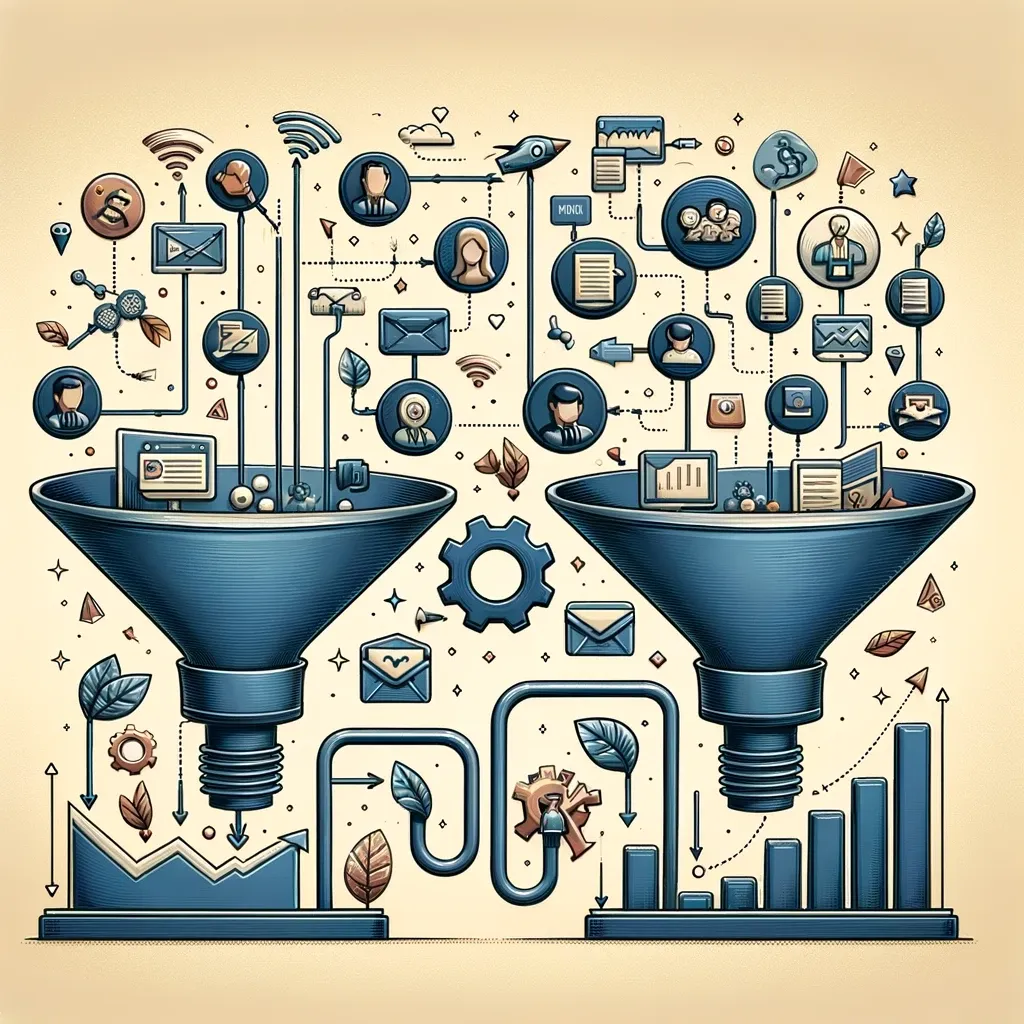
Maximizing Efficiency with Minimal Effort: Streamlining Your Business with the Dual Funnel System
Introduction: In the quest for business growth, efficiency isn’t just a buzzword—it's the backbone of a thriving company. For small business owners, the Dual Funnel System presents an opportunity to streamline processes like never before. This innovative approach divides the customer acquisition and retention processes, allowing for targeted strategies that enhance productivity. This blog will walk you through the practical steps and strategies to effectively implement the Dual Funnel System, optimize task segmentation, and customize it to fit the unique needs of your business.
Understanding the Dual Funnel System: The Dual Funnel System separates the sales process into two distinct parts: the Lead Generation Funnel and the Client Management Funnel, each with its specialized tasks and goals.
Lead Generation Funnel:
Focuses on attracting prospects and turning them into leads.
Strategies involve content marketing, SEO, social media engagement, and paid advertising campaigns.
Automation tools like CRM systems can be used to capture lead information and initiate lead nurturing workflows.
Fulfillment Funnel:
Aims to convert leads into paying customers and maintain their loyalty.
Involves follow-up communications, customer support, upselling, and onboarding.
Utilizes CRM for tracking customer interactions, purchase history, and providing personalized experiences.
Implementing the Dual Funnel System:
Segmentation of Tasks:
Analyze your customer journey to identify key touchpoints for lead generation and client management.
Assign specific roles and automation tools to handle tasks at each stage, ensuring no overlap and a clear focus on objectives.
Enhancing Efficiency with Automation:
Integrate automation software that aligns with your business goals and customer needs.
Use email autoresponders, scheduling tools, and automated reporting to reduce manual workloads.
Ensure that your automation tools are interconnected, providing a seamless transition of information between the two funnels.
Customization for Different Business Types:
Service-based businesses can use the system to manage appointments and follow-ups, while product-based businesses might focus on transactional emails and inventory updates.
Tailor the system based on customer behaviors; what works for a B2B company may differ for a B2C retailer.
Best Practices for the Dual Funnel System:
Regularly review and adjust your strategies based on performance metrics from both funnels.
Engage in continuous learning and adapt the system to incorporate new tools and methodologies.
Train your team on the importance of the Dual Funnel System and how their roles contribute to its success.
Conclusion: The Dual Funnel System is more than just a structural concept; it’s a strategic approach to business management. By dividing the focus between lead generation and client management, small business owners can achieve greater efficiency with minimal effort. With the right blend of automation and customization, the Dual Funnel System can transform your business operations, allowing you to do more with less and scale your success.